Plants for a Bioactive Enclosure, and What You Need to Avoid
Why live plants are important for reptile welfare.
Orion White
Education Assistant - Herpetological Environments and Research in Practice (HERP) Laboratory, Eckerd College
- Plants clean the air in your enclosure
- Pesticides can be very harmful to your reptiles
- Living in an urban environment could expose your reptile to pollutants from the air or water
- The plant you keep with your reptile needs to have been found in the same or a similar environment as your reptile
Live plants are not only aesthetically pleasing to see in your enclosure, but also provide a range of benefits to the reptile
While live plants make the enclosure look more naturalistic, they also provide additional benefits beyond aesthetics. Herbivorous species can use plants as a supplementary food source, and, more recently, plants have been recognized worldwide as environmentally friendly and natural air-purification mechanisms.[1]Brilli, F., Fares, S., Ghirardo, A., de Visser, P., Calfapietra, C., & Loreto, F. (2018). Plants for sustainable improvement of indoor air quality. Trends in Plant Science, 23(6), 507–512. https://doi.org/10.1016/j.tplants.2018.03.004View source [8]Han, K. T., & Ruan, L. W. (2020). Effects of indoor plants on air quality: A systematic review. Environmental Science and Pollution Research, 27(14), 16019–16051. https://doi.org/10.1007/s11356-020-08179-4View sourceIf you have a grow light embedded in the enclosure, it will help the plants clean the air more effectively.[18]Weerasinghe, N. H., Silva, P. K., Jayasinghe, R. R., Abeyrathna, W. P., John, G. K. P., & Halwatura, R. U. (2023). Reducing CO₂ level in the indoor urban built environment: Analysing indoor plants under different light levels. Cleaner Engineering and Technology, 14, 100645. https://doi.org/10.1016/j.clet.2023.100645View source Numerous studies have shown the potential for phytoremediation, the use of plants to purify localised air/soil, to eliminate pollutants like volatile organic compounds (VOCs), which are harmful chemicals that are found in plastics, can be used to enhance indoor air quality.[3]Environmental Protection Agency. (2025a). Ingredients used in pesticide products: Atrazine. https://www.epa.gov/ingredients-used-pesticide-products/atrazineView source [4]Environmental Protection Agency. (2025b). Ingredients used in pesticide products: Glyphosate. https://www.epa.gov/ingredients-used-pesticide-products/glyphosateView source [5]Environmental Protection Agency. (2026). What are volatile organic compounds (VOCs)? https://www.epa.gov/indoor-air-quality-iaq/what-are-volatile-organic-compounds-vocsView source [15]Syafiah Harzanti, T., & Fitri Purwanti, I. (2025). Green solutions: The role of spider plant (Chlorophytum comosum) and peace lilies (Spathiphyllum wallisii) in mitigating indoor formaldehyde. BIO Web of Conferences, 157, 05002. https://doi.org/10.1051/bioconf/202515705002View source
If you are keeping your reptile with artificial plants or plastic items, adding live plants can help reduce localised VOC emissions, which will likely support their health.[20]Wolverton, B. C., Johnson, A., & Bounds, K. (1989). Interior landscape plants for indoor air pollution abatement: An interim report. NASA. https://ntrs.nasa.gov/citations/19930072988View source When selecting plants for a reptile enclosure, it is crucial to understand each plant's requirements to ensure they can be supported in your reptile ecosystem.[10]Maple, T. L., & Perdue, B. M. (2013). Environmental enrichment. In T. L. Maple & B. M. Perdue (Eds.), Zoo animal welfare (pp. 95–117). Springer. https://doi.org/10.1007/978-3-642-35955-2_5 https://ndl.ethernet.edu.et/bitstream/123456789/44940/1/Terry%20L.%20Maple.pdfView source [14]Seiffert, S. (2009). Developing and sharing information about the use of plants within animal collections: The BIAZA zoo plant wiki. In ICEE Conference Proceedings. https://www.academia.edu/95927321/Exploring_the_potential_for_plant_based_enrichmentView source [6]Frediani, K. (2009). Exploring the potential for plant-based enrichment. In Proceedings of the 9th International Conference on Environmental Enrichment. https://zoolex.org/media/uploads/2018/07/30/frediani_2009_plant_based_enrichment.pdfView source
When you decide to include live plants, they must be free from pesticides and fertilizers
Plants should be free from pesticides or other chemical treatments before being introduced into reptile enclosures, as reptiles can be sensitive to pesticide exposure.[19]Weir, S. M., Yu, S., Knox, A., Talent, L. G., Monks, J. M., & Salice, C. J. (2016). Acute toxicity and risk to lizards of rodenticides and herbicides commonly used in New Zealand. New Zealand Journal of Ecology, 40(3), 342–350. https://doi.org/10.20417/nzjecol.40.43View source Most people purchase plants from hardware stores or other greenhouse stores, where plants are often exposed to contaminants, such as fertilizers or pests, that require pesticide treatment. These chemical contaminants may be toxic and contribute to declines in reptile populations.[19]Weir, S. M., Yu, S., Knox, A., Talent, L. G., Monks, J. M., & Salice, C. J. (2016). Acute toxicity and risk to lizards of rodenticides and herbicides commonly used in New Zealand. New Zealand Journal of Ecology, 40(3), 342–350. https://doi.org/10.20417/nzjecol.40.43View source Pesticides such as atrazine, glyphosate, and the insecticide endosulfan have been associated with negative ecological and physiological effects in reptiles and amphibians, contributing to declines in biodiversity in agricultural landscapes.[17]Wanger, T. C. (2023). Pesticides reduce tropical amphibian and reptile diversity in agricultural landscapes in Indonesia. PeerJ, 11, e15046. https://doi.org/10.7717/peerj.15046View source [3]Environmental Protection Agency. (2025a). Ingredients used in pesticide products: Atrazine. https://www.epa.gov/ingredients-used-pesticide-products/atrazineView source [4]Environmental Protection Agency. (2025b). Ingredients used in pesticide products: Glyphosate. https://www.epa.gov/ingredients-used-pesticide-products/glyphosateView source [5]Environmental Protection Agency. (2026). What are volatile organic compounds (VOCs)? https://www.epa.gov/indoor-air-quality-iaq/what-are-volatile-organic-compounds-vocsView sourceTherefore, while seeking to improve welfare, the common owner may unknowingly purchase plants that have been treated with pesticides, thereby putting the animal at risk. Reptiles are not currently considered for risk evaluation during pesticide admission procedures in the EU.[11]Mingo, V., Laskowski, R., & Zaldívar, J. M. (2016). Risk of pesticide exposure for reptile species in the European Union. Environmental Pollution, 215, 164–170. https://doi.org/10.1016/j.envpol.2016.05.011View source As such, future research should examine the effects of pesticides on reptiles to better understand the risks they may pose.
Although research on the effects of pesticides on reptiles is limited and the risks are unknown, it is advisable to quarantine the plant to remove any contaminants that could harm your herptile. Ensure you flush your plant by removing it from the soil and placing it in water that is changed daily for at least 30 days prior to planting in the enclosure. When choosing plants, make sure they are non-toxic to your reptile and somewhat hardy.[16]Tansley, L. (2024, October 15). Best reptile-safe plants: 10 top choices for a healthy habitat. Northampton Reptile Centre. https://www.reptilecentre.com/blogs/reptile-blog/best-reptile-safe-plantsView source
Safe Plants For Reptiles
The plants chosen for reptiles will depend on whether you are trying to create tropical or arid set-ups.[9]Divers, S. J., & Stahl, S. J. (Eds.). (2018). Mader’s reptile and amphibian medicine and surgery (3rd ed.). Elsevier. https://shop.elsevier.com/books/maders-reptile-and-amphibian-medicine-and-surgery/divers/978-0-323-48253-0View source Plants you’ll commonly see in reptile enclosures are African Violet, Bromeliads, Spider plant, succulent species, and Devil’s Ivy/pothos
While at Tampa Repticon, I spoke with a Zoo Med representative, who described the challenges of establishing an arid environment with live plants. The major problem to tackle is ensuring the plants get the water they need without raising humidity too high for the arid reptile. As such, for arid environments, he recommends succulents or other hardy plants that can withstand low water. He suggested that in arid environments, it is particularly important to have a false bottom/drainage layer in the enclosure to keep soil dry and prevent root rot. It is also advisable to mix some artificial plants into the enclosure to keep it looking full.
The representative and I also talked about tropical environments. There have been many more successful tropical bioactive environments, as the plants' humidity requirements more commonly align with those of the reptiles. In these enclosures, you might see vines, succulents, grasses, or other such plants that can be found around the tropics. I also asked some snake keepers for plant recommendations, and they all said a vine that can withstand some weight and damage is best for pythons.
Conclusions
Plants can keep the air around your reptile cleaner, as reptiles are susceptible to air pollutants. Live plants can also make the enclosure look nicer to keepers and the reptiles. The plants can help maintain high humidity by transpiring throughout the day. They can also make the enclosure more closely mimic your reptile's natural environment. If you want to know more about which plants are best for different environments, you can check out our guide here.
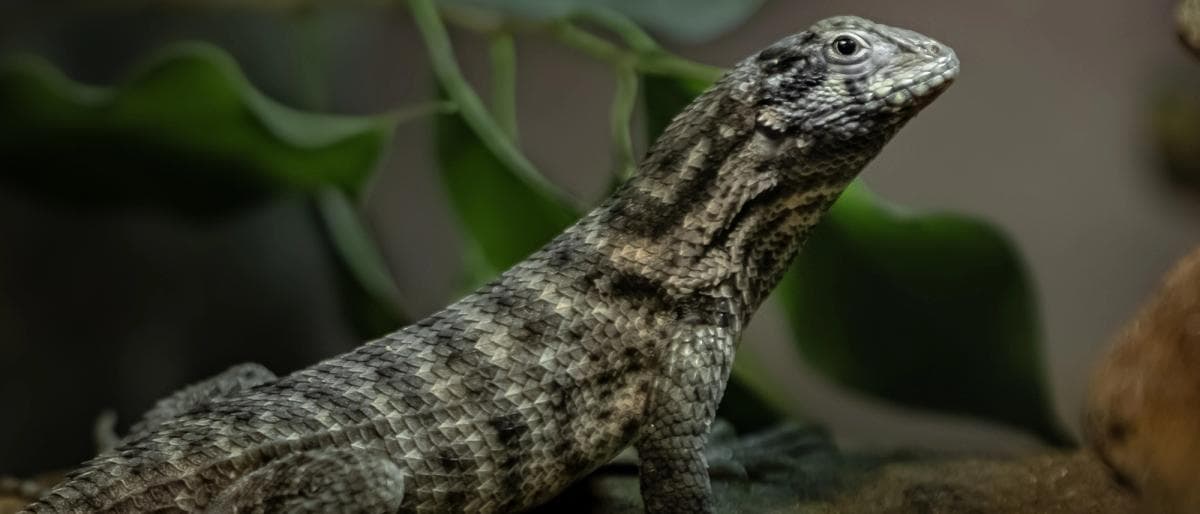
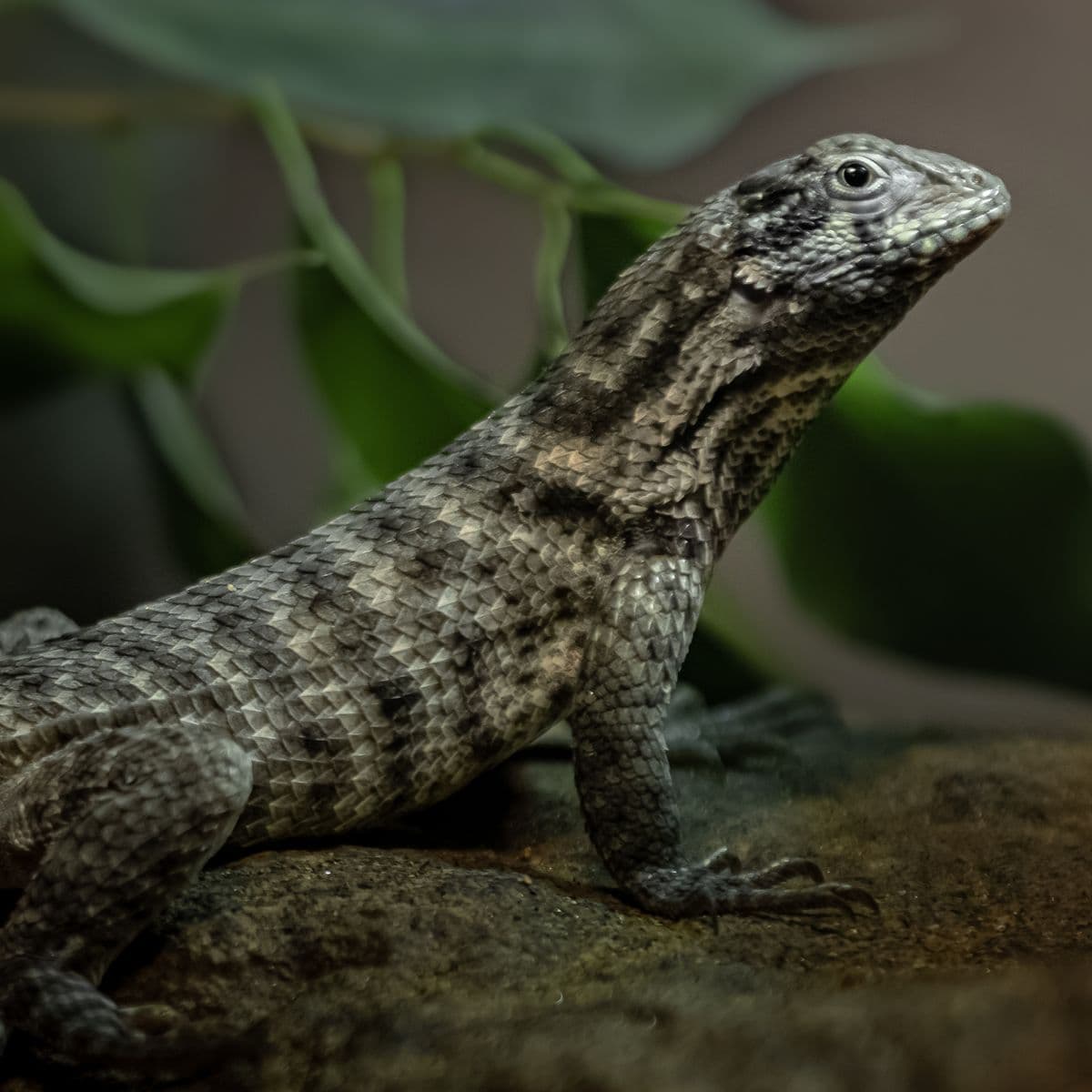
Image Credit: Northern curly tail lizard in natural enclosure.[21]Svoboda, J, https://www.vecteezy.com/photo/2408023-northern-curly-tailed-lizardView source
References
- [1]Brilli, F., Fares, S., Ghirardo, A., de Visser, P., Calfapietra, C., & Loreto, F. (2018). Plants for sustainable improvement of indoor air quality. Trends in Plant Science, 23(6), 507–512. https://doi.org/10.1016/j.tplants.2018.03.004
- [2]Croteau, M. C., Hogan, N. S., Gibson, J. F., Lean, D. R. S., & Trudeau, V. L. (2008). Toxicological threats to amphibians and reptiles in urban environments. In J. C. Mitchell, R. E. Jung Brown, & B. Bartholomew (Eds.), Urban herpetology (pp. 197–209). Society for the Study of Amphibians and Reptiles. https://www.researchgate.net/publication/316243667_Toxicological_threats_to_amphibians_and_reptiles_in_urban_environments
- [3]Environmental Protection Agency. (2025a). Ingredients used in pesticide products: Atrazine. https://www.epa.gov/ingredients-used-pesticide-products/atrazine
- [4]Environmental Protection Agency. (2025b). Ingredients used in pesticide products: Glyphosate. https://www.epa.gov/ingredients-used-pesticide-products/glyphosate
- [5]Environmental Protection Agency. (2026). What are volatile organic compounds (VOCs)? https://www.epa.gov/indoor-air-quality-iaq/what-are-volatile-organic-compounds-vocs
- [6]Frediani, K. (2009). Exploring the potential for plant-based enrichment. In Proceedings of the 9th International Conference on Environmental Enrichment. https://zoolex.org/media/uploads/2018/07/30/frediani_2009_plant_based_enrichment.pdf
- [7]Gawrońska, H., & Bakera, B. (2015). Phytoremediation of particulate matter from indoor air by Chlorophytum comosum L. plants. Air Quality, Atmosphere & Health, 8(3), 265–272. https://doi.org/10.1007/s11869-014-0285-4
- [8]Han, K. T., & Ruan, L. W. (2020). Effects of indoor plants on air quality: A systematic review. Environmental Science and Pollution Research, 27(14), 16019–16051. https://doi.org/10.1007/s11356-020-08179-4
- [9]Divers, S. J., & Stahl, S. J. (Eds.). (2018). Mader’s reptile and amphibian medicine and surgery (3rd ed.). Elsevier. https://shop.elsevier.com/books/maders-reptile-and-amphibian-medicine-and-surgery/divers/978-0-323-48253-0
- [10]Maple, T. L., & Perdue, B. M. (2013). Environmental enrichment. In T. L. Maple & B. M. Perdue (Eds.), Zoo animal welfare (pp. 95–117). Springer. https://doi.org/10.1007/978-3-642-35955-2_5 https://ndl.ethernet.edu.et/bitstream/123456789/44940/1/Terry%20L.%20Maple.pdf
- [11]Mingo, V., Laskowski, R., & Zaldívar, J. M. (2016). Risk of pesticide exposure for reptile species in the European Union. Environmental Pollution, 215, 164–170. https://doi.org/10.1016/j.envpol.2016.05.011
- [12]Prabakaran, M., Kim, S. H., & Kim, H. J. (2019). Evaluation of antioxidant and anticorrosion properties of Epipremnum aureum. Arabian Journal for Science and Engineering, 44(1), 577–586. https://doi.org/10.1007/s13369-018-3398-5
- [13]Ryu, J., Kim, J. J., Byeon, H., Go, T., & Lee, S. J. (2019). Removal of fine particulate matter (PM2.5) via atmospheric humidity caused by evapotranspiration. Environmental Pollution, 245, 253–259. https://doi.org/10.1016/j.envpol.2018.11.004
- [14]Seiffert, S. (2009). Developing and sharing information about the use of plants within animal collections: The BIAZA zoo plant wiki. In ICEE Conference Proceedings. https://www.academia.edu/95927321/Exploring_the_potential_for_plant_based_enrichment
- [15]Syafiah Harzanti, T., & Fitri Purwanti, I. (2025). Green solutions: The role of spider plant (Chlorophytum comosum) and peace lilies (Spathiphyllum wallisii) in mitigating indoor formaldehyde. BIO Web of Conferences, 157, 05002. https://doi.org/10.1051/bioconf/202515705002
- [16]Tansley, L. (2024, October 15). Best reptile-safe plants: 10 top choices for a healthy habitat. Northampton Reptile Centre. https://www.reptilecentre.com/blogs/reptile-blog/best-reptile-safe-plants
- [17]Wanger, T. C. (2023). Pesticides reduce tropical amphibian and reptile diversity in agricultural landscapes in Indonesia. PeerJ, 11, e15046. https://doi.org/10.7717/peerj.15046
- [18]Weerasinghe, N. H., Silva, P. K., Jayasinghe, R. R., Abeyrathna, W. P., John, G. K. P., & Halwatura, R. U. (2023). Reducing CO₂ level in the indoor urban built environment: Analysing indoor plants under different light levels. Cleaner Engineering and Technology, 14, 100645. https://doi.org/10.1016/j.clet.2023.100645
- [19]Weir, S. M., Yu, S., Knox, A., Talent, L. G., Monks, J. M., & Salice, C. J. (2016). Acute toxicity and risk to lizards of rodenticides and herbicides commonly used in New Zealand. New Zealand Journal of Ecology, 40(3), 342–350. https://doi.org/10.20417/nzjecol.40.43
- [20]Wolverton, B. C., Johnson, A., & Bounds, K. (1989). Interior landscape plants for indoor air pollution abatement: An interim report. NASA. https://ntrs.nasa.gov/citations/19930072988
- [21]Svoboda, J, https://www.vecteezy.com/photo/2408023-northern-curly-tailed-lizard
Similar articles

Bioactive Enclosure Maintenance: Best Practices and Common Mistakes
Learn about keeping your bioactive enclosure running once its set up, from managing plants to the clean-up crew

A Brief Introduction to Animal Welfare and How it Applies to Reptile Keeping
Understanding animal welfare is essential to providing good reptile welfare for your pet(s). Learn more with Liam from Reptiles and Research!