Species Library
Knob-tailed Gecko
Nephrurus spp.
Knob-tailed Gecko Care Sheet
Welcome to the ReptiFiles Knob-tailed Gecko Care Sheet! This care sheet was written by a professional reptile husbandry specialist, compiled based on reputable sources such as scientific research papers, natural history data, and the experiences of longtime keepers and breeders of this species. You can find a list of these sources at the bottom of this page.
What Are Knob-tailed Geckos?
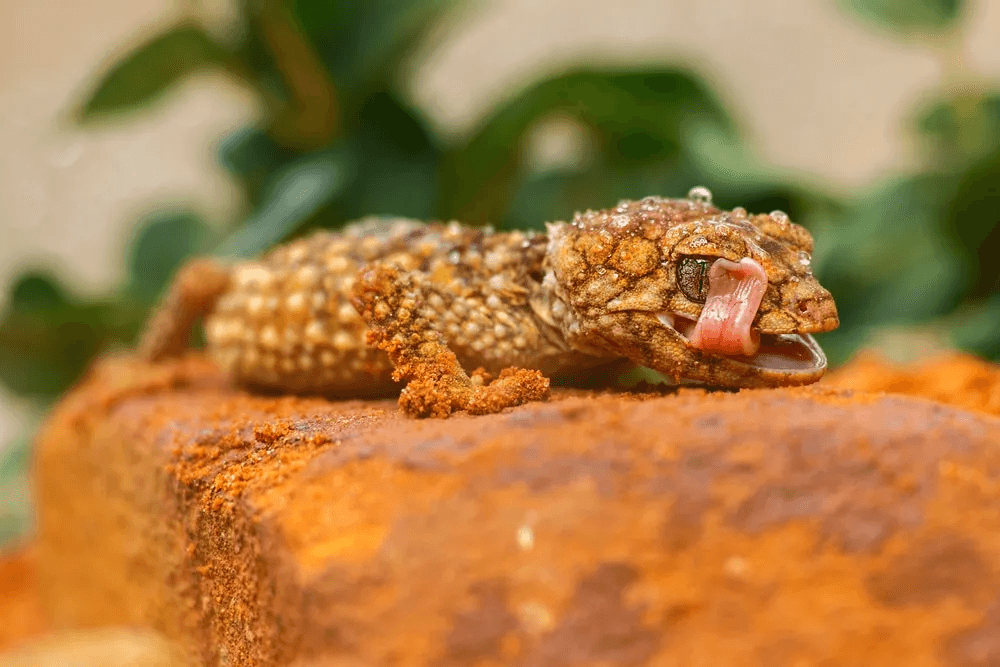
Knob-tailed geckos (Nephrurus spp.) are a genus of 4-5.5” long Australian lizards with large heads, oversized eyes, vertical pupils, plump bodies, long slender limbs, short padless toes, and a very short tail ending in a distinctive knob. Coloring and pattern vary by species. Julander classifies knob-tailed geckos into four groups: rough, banded, thin-tailed, and smooth.
Knob-tailed geckos are distributed all over the Australian continent, from arid zones to dry tropics. They can be found at sand dunes, rocky slopes, rocky plains, scrub, and spinifex grassland. These terrestrial lizards often spend the day in a burrow and then forage at night, starting at sundown.
A Complete Guide to Reptiles of Australia, 6th Edition lists 10 different Nephrurus species with average snout-to-vent lengths. (Females are generally larger than males.)
- Starred Knob-tailed Gecko (N. stellatus) — SVL 90mm
- Pale Knob-Tailed Gecko (N. laevissimus) — SVL 93mm
- Mid-line Knob-tailed Gecko (N. vertebralis) — SVL 93mm
- Southern Banded Knob-tailed Gecko (N. wheeleri) — SVL 93mm
- Pernatty Knob-tailed Gecko (N. deleani) — SVL 100mm
- Smooth Knob-Tailed Gecko (N. levis) — SVL 102mm
- Northern Banded Knob-tailed Gecko (N. cinctus) — SVL 102mm
- Prickly Knob-tailed Gecko (N. asper) — SVL 115mm
- Northern Knob-tailed Gecko (N. sheai) — SVL 120mm
- Centralian Knob-tailed Gecko (N. amyae) — SVL 135mm
The most common Nephrurus species in the reptile hobby are N. amyae, N. asper, N. cinctus, N. deleani, N. levis, and N. wheeleri.
Although not particularly handleable, knob-tailed geckos are fairly hardly and can make interesting and rewarding little pets for any reptile keeper. When proper knob-tailed gecko care is provided, they are likely to live at least 10 years.
Nephrurus levis. Source: Deposit Photos
Knob-tailed Gecko Shopping List
These are products I personally recommend and trust for setting up a functional knob-tailed gecko terrarium. These items have been selected to work together as a whole in a 36x18x18 enclosure, assuming a —35% mesh block. If you choose to house your knob-tailed gecko in an enclosure of a different size or mesh type, the following recommendations may not be appropriate. Read the rest of this care sheet to learn how to select the best equipment and products for your individual setup without compromising the quality of your pet’s care.
Some of the links in this care sheet are paid links — if you’d like to know why ReptiFiles uses paid links, visit this page.
- Front-opening 36”L x 18”W x 18”H terrarium, preferably larger
- 50w Exo Terra Intense Basking Spot bulb
- Zoo Med Mini Deep Dome lamp fixture
- 12” Arcadia T5 SO ShadeDweller 7% UVB kit
- 22” Arcadia JungleDawn LED Bar
- Zilla 24/7 Digital Power Center
- Zoo Med Digital Thermometer/Hygrometer Combo, x2
- Exo Terra Desert Sand, 120 lbs*
- Hides/caves, x2
- Environmental enrichment (flat stones, hollow logs, thin branches, live/artificial desert plants, etc.)
- Escape-resistant feeder insect bowl
- Medium water bowl
- Repashy Calcium Plus NoD supplement
- Soft-tipped feeding tweezers
- F10SC RTU veterinary disinfectant
- Spray bottle (for misting)
*best purchased locally rather than online due to shipping costs
Knob-tailed Gecko Enclosure Size
Knob-tailed geckos may be small, but they still need an enclosure that is large enough to give them adequate opportunity to thermoregulate, explore, hunt, and generally exercise natural behaviors.
The minimum recommended enclosure size for housing one knob-tailed gecko varies by the species you’re keeping. Smaller individuals ≤ 4”/10cm can be kept in a 24”L x 18”W x 18”H / 60 x 45 x 45cm, but the larger species should be kept in no smaller than a 36”L x 18” x 18”H / 90 x 45 x 45cm. However, larger is always better!
Here are some enclosures that are appropriate for housing a knob-tailed gecko:
≤ 4” / 10cm
- Zen Habitats 2’x2’x2′ Meridian PVC Reptile Enclosure
- Toad Ranch SF24 2’x2’x19″ Luxury Reptile Enclosure
- Kages 30”x16”x16” Premium PVC Reptile Enclosure
- Repti Zoo 34 Gallon Glass Reptile Terrarium (24 x 18 x 18)
> 4” /10cm
- Dubia 36x18x18 (50 Gallon) Reptile Enclosure V3
- Kages 36”x24”x18” Premium PVC Reptile Enclosure
- Toad Ranch 3’x1.5’x19″ Premium HDPE-PVC Reptile Enclosure
- Repti Zoo Easy Folding 50 Gallon Terrarium
Can multiple knob-tailed geckos be housed in the same enclosure?
Knob-tailed geckos are solitary by nature, and best housed singly.
Lighting & UVB for Knob-tailed Geckos
Knob-tailed geckos are nocturnal, which means that they are primarily active at night, but Julander notes that they can be irregularly active during the day, especially around sundown. To help regulate their day/night cycle, a knob-tailed gecko’s lights should be on for 11 hours during winter and 13 hours during summer, with gradual transitions in-between. Alternatively, you can use a smart timer (I use Kasa) to sync your lights to your local sunrise and sunset times.
UVB Lighting
Technically, knob-tailed geckos can survive without UVB lighting as long as they get enough supplemented vitamin D3. However, you will get the best results from using appropriate UVB lighting (which allows reptiles to make their own D3) rather than relying on supplements.
UVB lighting can be tricky, because in order to get the right strength of UVB (measured by UV Index, or UVI), distance must be considered, and different reptiles need different amounts of UVB. Different brands, strengths, and fixtures also create different results — and some are altogether unsafe. To provide appropriate UVB to a knob-tailed gecko in an 18” tall enclosure, ReptiFiles recommends the following lamps, mounted over the mesh:
- 14″ Zoo Med T5 HO Reptisun 5.0 UVB kit — 7-9” / 18-22cm
- 12″ Arcadia T5 SO ShadeDweller 7% UVB kit — 8-12” / 20-30cm
(These recommendations are approximations based on measurements taken with the abovementioned fixtures and assuming a 35% mesh block. It is strongly recommended to use a Solarmeter 6.5 to determine the best placement to achieve a UVI of 1.0-2.0 in the basking area.)
The Reptile Systems Ferguson Zone 1 and Exo Terra T5 VHO UVB100 UVB kits can also be used with knob-tailed geckos, but ReptiFiles doesn’t currently enough data to provide reliable distancing estimates. If you would like to use one of these lamps, I strongly recommend verifying your UVI with a Solarmeter 6.5 during installation.
T5 UVB bulbs must be replaced every 12 months in order to remain effective (6 months for Exo Terra)!
General Illumination
Knob-tailed geckos are primarily active at night, not daytime, and their eyes are very sensitive to light. That said, it is still best practice to provide about 5,000-9,000 lux of illumination in the brightest part of the setup (the basking area). Lux can be measured with a lux meter like the WapoRich RQ-881D.
I like the Bio Dude Glow N Grow or Arcadia JungleDawn LED Bar, spanning at least 50% of the enclosure’s length. As an added benefit, these lamps are fantastic for supporting plants in a bioactive setup!
Knob-tailed Gecko Temperature Requirements
Humans are warm-blooded, which means that our body temperature is automatically regulated. Reptiles, however, are cold-blooded, and more specifically they are poikilothermic, which means they need to move between areas of different temperatures in order to regulate their body temperature. Here’s the range of temperatures that should be available to a knob-tailed gecko:
- Basking temperature: 88-90°F (°C)
- Cool zone temperature: 70-81°F (°C)
- Nighttime temperature: >64°F (°C)
If you have a power density meter, target infrared-A levels of 50-149w/m2 (preferably around 125) in the basking area. Power density should be prioritized over basking temperature.
You will need one or two 50w incandescent heat bulbs for basking and creating the right ambient temperatures in your setup. Start with an Exo Terra Intense Basking Spot or Repti Zoo Intense Basking Spot bulb in a 5.5″ ceramic-socket dome lamp like the Zoo Med Mini Deep Dome lamp fixture.
If this is too warm, reduce the wattage of the bulb. If your basking area is too cool, you will need a higher wattage bulb instead. Expect this process to take a bit of trial and error.
To track enclosure temperatures, use two digital probe thermometers, with one probe on the basking surface and the other probe on the cool end. Most reptile-brand digital probe thermometers function well.
Winter Cooling/Brumation:
Not all Nephrurus brumate, but for the species that don’t live in Australia’s semi-tropical regions, brumation is important to successful breeding. Even if you don’t plan on breeding your knob-tailed gecko, brumation is still recommended to support hormonal balance and long-term health in your pet.
Day length plays a significant role in triggering brumation, but food availability and temperatures are also important factors. Here’s a sample schedule:
- Stop offering food 7-10 days prior to scheduled brumation (keep offering water until 2 days prior).
- Use a lamp dimmer to gradually reduce temperatures to 15.5-18C / 60-64F over the course of 1 week.
- Brumate for 1-2 months. Check on your gecko 1x/week during this period to make sure it’s healthy and offer a spritz of water. The gecko should be sluggish but still responsive.
- After brumation, gradually increase temperatures back up to normal over 1-2 weeks.
- Once temperatures are normal, resume feedings.
Additional notes: Gradual transitions are key to helping your gecko brumate in a healthy way. Never feed a reptile during brumation, as low temperatures prevent proper digestion and can be life-threatening!
DO NOT BRUMATE A SICK OR UNDERWEIGHT REPTILE. If your pet seems to be losing a significant amount of weight or otherwise unhealthy during brumation, see a vet immediately.
Knob-tailed Gecko Humidity Requirements
Like many arid reptiles in captivity, knob-tailed geckos’ needs for hydration are often underestimated, leading to dehydration and related health problems. They may not need a humid environment, but they still need access to appropriate tools for meeting their moisture needs.
A simple yet effective method for humidity management with this species is simply to:
- Always keep a water bowl available.
- Maintain a humid hide on the cool end. Make sure that the moist hide(s) are always kept moistened, but not soggy. Moist hides can be plastic or resin caves from the pet store, or they can be as simple as the space under a piece of stone or cork bark.
- Mist the cool half of the setup 2-3x/week with a spray bottle. It helps to keep the sand on the humid side of the setup lightly moistened.
Remember: a knob-tailed gecko’s enclosure should have moisture, but it should not be wet!
Knob-tailed Gecko Substrate Options
Substrate is an important part of a knob-tailed gecko terrarium because this genus likes to have the opportunity to dig. A good substrate also helps maintain optimal humidity levels and creates a natural humid hide. For Nephrurus, the best substrate is fine sand. Knob-tailed gecko’s “lunge-and-pounce” hunting style makes minor ingestion inevitable, but with fine sand and adequate hydration, it’s unlikely to cause health problems.
Here are some of my preferred options for fine sand:
Avoid play sand, as it is too coarse for these geckos. Natural, fine sand is best, as each particle is smoother (softer) than man-made sands derived from crushed stone.
You will need a minimum of 3-4″ / 8-10cm of sand to meet a knob-tailed gecko’s needs. This takes 0.75-1 cubic ft (or 75-100) in a 24″ x 18″ enclosure. For a 38” x 18” enclosure, expect to need about 1.1-1.5 cubic ft (or 110-150lbs).
Feces and urates should be removed daily, and contaminated substrate should be scooped out and replaced. Substrate should be completely replaced once every 3-6 months, depending on how diligent you are about daily maintenance.
Environmental Enrichment: Decorating the Terrarium
Decorations are more than just aesthetic touches — the right ones can also play a vital role in your gecko’s enclosure as environmental enrichment. Enrichment items encourage exercise, stimulate your pet’s natural instincts, and help promote overall wellbeing, so don’t be afraid to go a little crazy! Of course, creating an enclosure that is pleasant to look at is a nice benefit, too.
Here are some generic ideas to get you started, but it’s important to pay attention to your species’ instinctive preferences for the enclosure’s layout. For example, N. amyae likes rock crevices. N. levis likes to rearrange the substrate inside their hides, so hides for this species should be several times larger than the animal itself.
- light-colored flat stones (flagstone, sandstone, concrete pavers, etc.)*
- artificial stones
- low, sturdy ghost wood or grape wood
- cork flats
- artificial hides/caves
- artificial plants
- live desert plants
- magnetic ledges
- photo background
- textured background
*most cost-effective to purchase locally from landscape supply shops rather than online
Arrange these items in a way that encourages your gecko to explore, offers plenty of shelter, and creates areas of both light and shade. One of the most common errors in reptile keeping is keeping the animal in a relatively sparse enclosure. Minimalism is not the goal here — your goal is to squeeze as much use out of the enclosure’s volume as possible in order to make it maximally functional as an animal’s living space.
For ideas on how to set up and decorate your enclosure, I recommend scrolling through photos of knob-tailed geckos in their natural habitat on iNaturalist!
If you want to make a rock stack in your enclosure, make sure to anchor it to the bottom of the enclosure and reinforce it against shifting, which can potentially crush a gecko! Gorilla Glue works well for sticking stones together in a terrarium. However, make sure to keep the interior of the stack accessible in case you need to get your pet out of there in a hurry.
Feeding Your Knob-tailed Gecko
Knob-tailed geckos are insectivores, which means that they need a diet of insects to get the right nutrition.
- Baby knob-tailed geckos (<2” / 5cm long) should be fed daily.
- Subadults (<1 year old) should be fed every other day.
- Adults (>1 year old) should be fed 3x/week.
Offer 2-4 insects eat each feeding, with each bug being slightly smaller than the animal’s head. Since knob-tailed geckos are nocturnal, the best time to feed them is around sunset.
Feeder insects for knob-tailed geckos: crickets, grasshoppers/locusts, dubia roach nymphs, discoid roach nymphs, mealworm beetles, silkworms, hornworms
My preferred feeder insect breeders are Dubia.com, Beastmode Silks, and Twin Cities Crickets.
The key to providing a healthy, balanced diet for your pet is VARIETY. Wild knob-tailed geckos eat all kinds of things, including ants, spiders, cockroaches, crickets, scorpions, caterpillars, beetles, and even smaller lizards when the opportunity presents itself. Provide as varied of a diet as you possibly can, and you will be rewarded with a healthier pet that always looks forward to mealtime.
Supplements
Feeder insects need to be “dusted” with a light coating of calcium powder before every feeding to balance their calcium-phosphorus ratio, and adding a multivitamin to the routine helps prevent deficiencies from developing.
There are many options, but Repashy CalciumPlus is a solid all-in-one supplement for getting started. For best results, use as directed by the label.
For optimum nutrition, feeder insects should be gutloaded for 2-3 days prior to feeding. I like to use a quality gutloading formula paired with hydrated water crystals for convenience (and you get better results than by using kitchen scraps). Here are some of my preferred gutloading formulas:
If you want to go the extra mile, changing up which gutload you use every once in a while helps your pet get more varied (and therefore more complete) nutrition.
Drinking Water
Always keep a small bowl of clean water available for your knob-tailed gecko. This should be shallow enough that a gecko can climb out if it falls into the water. Scrub out the water bowl every week with veterinary disinfectant such as Rescue or F10SC for good hygiene.
Handling Your Knob-tailed Gecko
Knob-tailed geckos can become tolerant of handling, depending on how they were raised by their breeder and how much you’re willing to work with them. However, generally speaking, Nephrurus do best with minimal handling. However, a good way to interact with your pet (and build trust) is by offering them feeder insects from a pair of feeding tweezers.
However, wait at least 2 weeks for your gecko to settle into its new home before trying to introduce yourself. Note that juveniles are generally more skittish than adults.
Hygiene
Quarantine
If you have other reptiles in your home (especially other Nephrurus!), it’s important to place your new pet in a basic quarantine setup for a month or few, away from contact with your other animals. During this time, take your new pet to an experienced reptile vet for an initial checkup, do any relevant testing for disease or parasites, and generally monitor their health.
It’s much easier to keep track of a reptile’s health in a quarantine setup than a fully-enriched habitat. For information on how to quarantine new reptiles, see this article and video: How to Quarantine Reptiles.
Keeping the Enclosure Clean
Feces and urates should be removed immediately, and contaminated substrate should be scooped out and replaced. Substrate should be completely replaced once every 6-12 months, depending on how diligent you are about spot-cleaning.
If water spots accumulate on the glass, use white vinegar and a paper towel to remove them. Rinse afterward to remove remaining residue and odor. If the odor of white vinegar bothers you, you can use lemon juice instead — although you will have to do a bit more scrubbing.
1x/year, do a complete cleanout of the enclosure. Remove all substrate and decor. Give the decor a good scrub with hot water. Wash the walls and floor, then follow with veterinary-grade disinfectant (Rescue, F10SC, or 10% bleach solution). Use the disinfectant according to the directions on the label, paying special attention to contact time and rinse requirements.
Handling Hygiene
Wash your hands or put on a new pair of disposable gloves before handling.
Never eat or put anything else in your mouth during handling.
After handling the lizard or performing maintenance on the enclosure, make sure to scrub your hands thoroughly with soap and water. If that isn’t possible, apply a generous amount of alcohol-based hand sanitizer.
If you were handling a reptile of unknown health, remove and wash your clothes before coming into contact with your own reptiles, in addition to washing your hands.
References
Cogger, H. (2014). Reptiles and Amphibians of Australia (7th ed., pp. 263–269). Csiro Publishing.
Crepuscular Species – The Arcadia Reptile Interactive UV Index Guide. (n.d.). Arcadia Reptile. Retrieved July 29, 2026, from https://arcadiareptile.com/lighting/crepuscular-species/
Julander, J. (n.d.). The Care and Breeding of the Smooth Knob-Tail Geckos (Nephrurus levis levis). Australian Addiction Reptiles. Retrieved July 5, 2021, from https://www.australianaddiction.com/knobcare.html
Julander, J., & Plank, M. (2020). The Complete Knob-Tailed Gecko. E. C. O. Herpetological Publishing & Distribution.
Knob-tailed Geckos (Genus Nephrurus). (n.d.). INaturalist. Retrieved July 27, 2026, from https://www.inaturalist.org/taxa/34188-Nephrurus
Laura, & Genevieve. (n.d.). Smooth Knob Tail Gecko (Nephrurus levis levis) Care Sheet. Good Life Herps. Retrieved July 5, 2021, from https://goodlifeherps.weebly.com/smooth-knob-tailed-gecko-nephrurus-levis-levis.html
Muryn, R., Baines, F., & Dishman, Q. (2025). Reptile Lighting Guide V10. https://reptifiles.com/wp-content/uploads/2026/01/20260121-The-Reptile-Lighting-Guide-V10.pdf
Pianka, E. R., & Vitt, L. J. (2003). Lizards Windows to the Evolution of Diversity (pp. 104, 138, 178, 181, 263). University of California Press.
Smooth Knob-Tailed Gecko Care. (2021). Gecko Daddy. https://www.geckodaddy.com/pages/smooth-knob-tail-care
Sykes, S. (2011, November 30). Knob-Tailed Gecko Care Sheet. Reptiles Magazine. https://reptilesmagazine.com/knob-tailed-gecko-care-sheet/
Wilson, S., & Swan, G. (2021). A Complete Guide to Reptiles of Australia (6th ed., pp. 64–68). New Holland Publishers Pty, Limited.